


Home - Tour India - Delhi
................................................................................................................................................................................................................................................................................................................................................................................................................................................................................................................
Delhi

Copyright © visitindia.org.in. All Rights Reserved.

Delhi has a rich historical past as is evident from the various monuments which bear witness to the rich and varied heritage of Delhi. Delhi shares its borders with Haryana and Uttar Pradesh, but the boundaries are not obvious as the population has spilled over to these states and now Gurgaon and Faridabad and NOIDA and Ghaziabad are a part of the capital territory.
Towering sky-scrapers next to historical monuments, posh South Extension market and the crowded Bazaars of Chandni Chowk, the Greater Kailash colony and the Yamuna Pushta slums --- all exist side by side. This is the rich and poor Delhi, this is Old and New Delhi. This is the seat of the government, the capital of India.

Travelogues/Travel Logs of Roadtrips
Hit the road with the summary guides of our trips to various places in India. Any information feel free to drop a mail at info@visitindia.org.in


Get online driving directions, route guides, weekend planners, and customised itineries. Check out a few of our favorite user road trips, then start an adventure of your own.....Explore India by Road


Find us :-
 (Custom) (3).png)
- Sarvana Bhavan at Janpath for excellent south Indian food.
- Sitaram Chhole Bhature, Paharganj
- Natraj Chaat, Chandni Chowk
- Andhra Bhavan Canteen for Andhra Style food.
- Kaventer in CP for Milk Shake
- karim's near Jama Masjid
- Kake ka dhaba at Cannaught place & Vasant Kunj
- Butter Chicken & Tandoori Chicken from Moti Mahal, Darya Ganj
- Rajinder Da Dhaba- Safdar jung Enclave- Chicken curry, fried fish, Seekh kabab
- Small market in front of Chanakya puri for momos and chinese food.
Travelogues/Photologues/Articles about Delhi

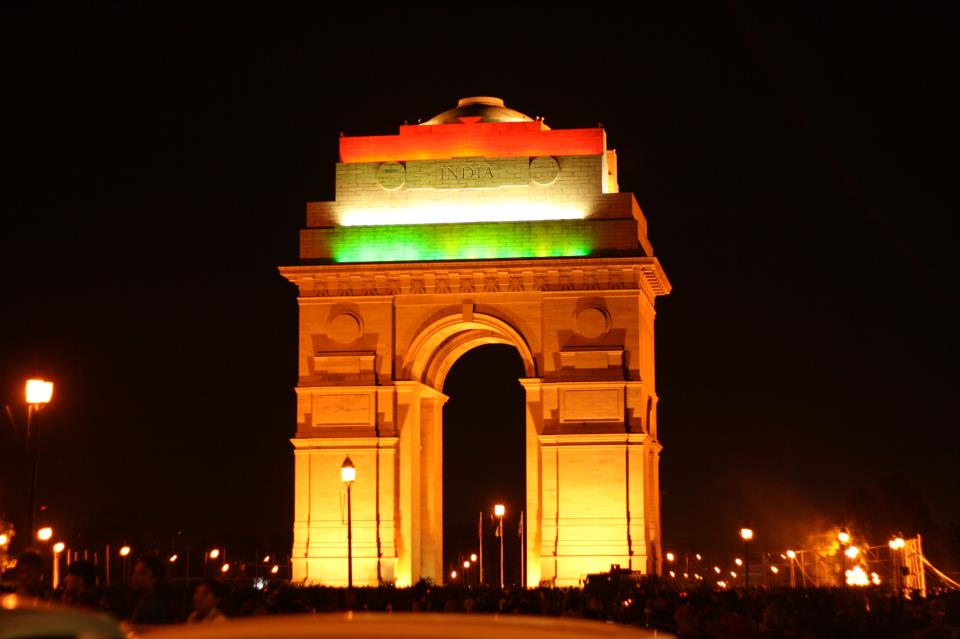
India gate
At the centre of New Delhi stands the 42m high Indian Gate. During nightfall, India gate is dramatically floodlit while the fountains nearby ass to its charm. Sorrounding thr structure are lush green lawns, which are popular as picnic spots.

Parliament house
Parliament House is a circular colonnaded building. It houses ministerial offices and numerous committee rooms. Conceived in the imperial style, the three semi circular buildings are used for the Rajya Sabha and Lok Sabha meetings.
Heritage
Garden of Five Senses
An ambitious project by Delhi tourism, the garden is a 20 acre marvel for public leisure. Located at Said-ul-jab village close to Mehrauli it appeals to all senses. A number of sculptures and murals have been set up in the garden making it one of the largest collections of public art in the country. Call 011 29536401, 2953519
Nature tours
Akshardham temple
As much a landmark as a place of worship, the Akshardham temple dedicated to Bhagwan Swaminarayan reflects the spirituality and beauty of India's ancient art, culture and architecture. The huge complex was inaugurated in 2005. Just a year old the Akshardham temple is already a hot favourite among the people. The musical fountins and boat rides on the water bodies sorrounding the sandstone and marble structures take you centuries back to the Vedic age, although the ideas are borrowed from Disneyland. The Nagra style of temple architecture like Khajuraho is depicted here and it took nearly 7000 craftsmen 5 years aand Rs 200 crore to be build up.
Spirituality
Dilli haat
Wheher you are carving for momos from Sikkim or bhel puri and vada pav from Maharashtra, you will get it all here in Dilli haat. The space is home to more than 25 food stalls of various states offering their local cusine at reasonable prices.
Hauz Khas village
It has emerged as a thriving locality with hundreds of restaurants offering cusines from across the world competing for space from south indian to Mediterranean cusine you will find it here.
Cusine
Wheher you are carving for momos from Sikkim or bhel puri and vada pav from Maharashtra, you will get it all here in Dilli haat. The space is home to more than 25 food stalls of various states offering their local cusine at reasonable prices.
Hauz Khas village
It has emerged as a thriving locality with hundreds of restaurants offering cusines from across the world competing for space from south indian to Mediterranean cusine you will find it here.
Chandni Chowk
The paratha stalls in Chandni Chowk are a heaven for foodies. Feast on old favourites like aloo, gobhi, paneer and palak parathasand also try special ones like kaju badam paratha.
Jama Masjid
For authentic Mughal non veg food make a trip to Jama Masjid which is a cluster of small restaurants and stalls selling delicious kababs.
Cusine
Khan Market
A popular market favoured by the elite many shops here sell books, clothing, homeware and accessories. Apart from customised and gourmet products, Khan market also has many swanky restaurants.
Connaught place
Situated in the heart of the city CP is one of the oldest and most popular shopping hubs in the city. From books to clothing and fine dining CP has it all.
Shopping


Uttarakhand
- Rajaji National Park (190 kms)
- Rishikesh (224 kms)
- Landsdowne (233 kms)
- Dehra dun (235 kms)
- Corbet (263 kms)
- Mussoorie (269 kms)
Himachal Pradesh
- Nahan (267 kms)
Rajasthan
- Bharatpur (190 kms)
- Sariska (249 kms)
- Jaipur (258 kms)
- Shekhawati (237 kms)
Uttar Pradesh
- Agra (205 kms)
- Fatehpur sikri
Haryana/Punjab
- Morni hills (69 kms)

- The Republic Day Parade down the Rajpath on January 26th.
- Delhi Rose Show held in January at Safdarjung's Tomb.
- Flower Show in February at Purana Quila and also in the Delhi University
- Urs in April/May and November/December - at Hazrat Nizamuddin Aulia's tomb
- Phool Walon ki Sair is celebrated in September/October at Mehrauli
- India International Trade Fair (IITF) is in November
- Garden Tourism Festival in Talkatora Gardens at Delhi in February
- Pirthvi Theatre Festival that is organized in the month of December.
- Auto Expo every two years in the month of January in Prakriti Maidan.
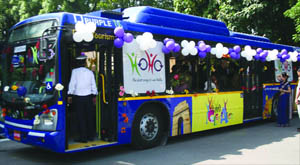

With various forts, buzzing markets and museums all around, there is plenty to explore in Delhi. Riding on the Hop On Hop Off bus is a convenient way to experience the city. The tickets are priced at Rs 300/- for adults and Rs 150/- for kids, and it runs from 8am to 8pm for 6 days except Mondays. The HOHO bus leaves every half an hour. Visit hohodelhi.com

HOHO bus route map. click to enlarge
Best time to visit Delhi
The best time to visit Delhi is from October to March. It is the winter season. The flower blooming period where parks and gardens are very beautiful. During April to August city is hot and humid in so it will be too hot for outdoor excursions.
The spring period of February to March and September to November which are one of the best times and peak seasons to visit the capital.

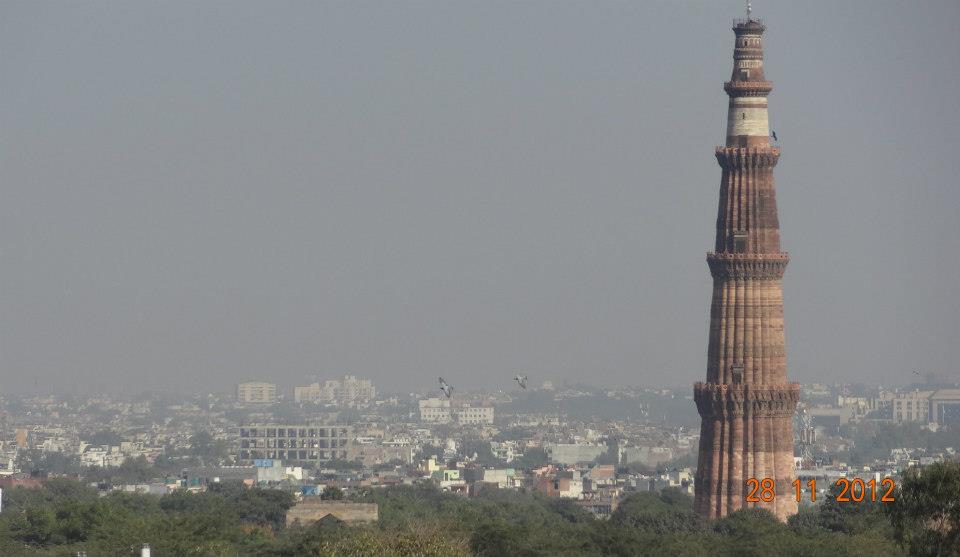

Mehrauli
The Mehrauli Archeological walk covers 100 acres of green land abutting the UNESCO World Heritage Site of Qutab Minar and the Mehrauli village settlements. It is the only area in Delhi that is dotted with remains from each era of its history. The walks are organised by Delhi Tourism and INTACH.
Old Delhi (Shahjahanabad)
The walk starts from Digambara Jain Mandir proceeding to Gauri Shankar temple and then to the Central Baptist Church which is just opposite the Sis Ganj Gurudwara. Sunheri Masjid is your next step followed by Parathewali gali and Kinari Bazaar in Chandni Chowk. The walk ends at Jama Masjid.
Know more - www.intachdelhichapter.org

Bed & Breakfast plan by Delhi Tourism
The Bed & Breakfast scheme was introduced for facilitation of tourists coming to Delhi so they could stay in a traditional Indian home and experience Indian culture. Visit delhi tourism B&B directory to know more.
Delhi Tourism Office
18-A, DDA SCO Complex,
Defence Colony,
New Delhi
Tel 011 246-47005, 24698431

Boating at Purana Quila & India Gate
Just outside the Purana qila and close to Pragati maidan is a lake where visitors can enjoy boating at nominal rates. Boating with the background of Purana qila is quite an unique experience At India gate lawns also one can enjoy picnics and there is boating here too.
Culture
Dilli Haat (INA, Pitampura)
Dilli Haat is an urban version of the traditional weekly market with a unique mix of craft, food and cultural activities. It gives visitors the chance to buy directly from the rural craftsmen who are allotted stalls in Dilli Haat in rotation. It is located both in INA and Pitampura.

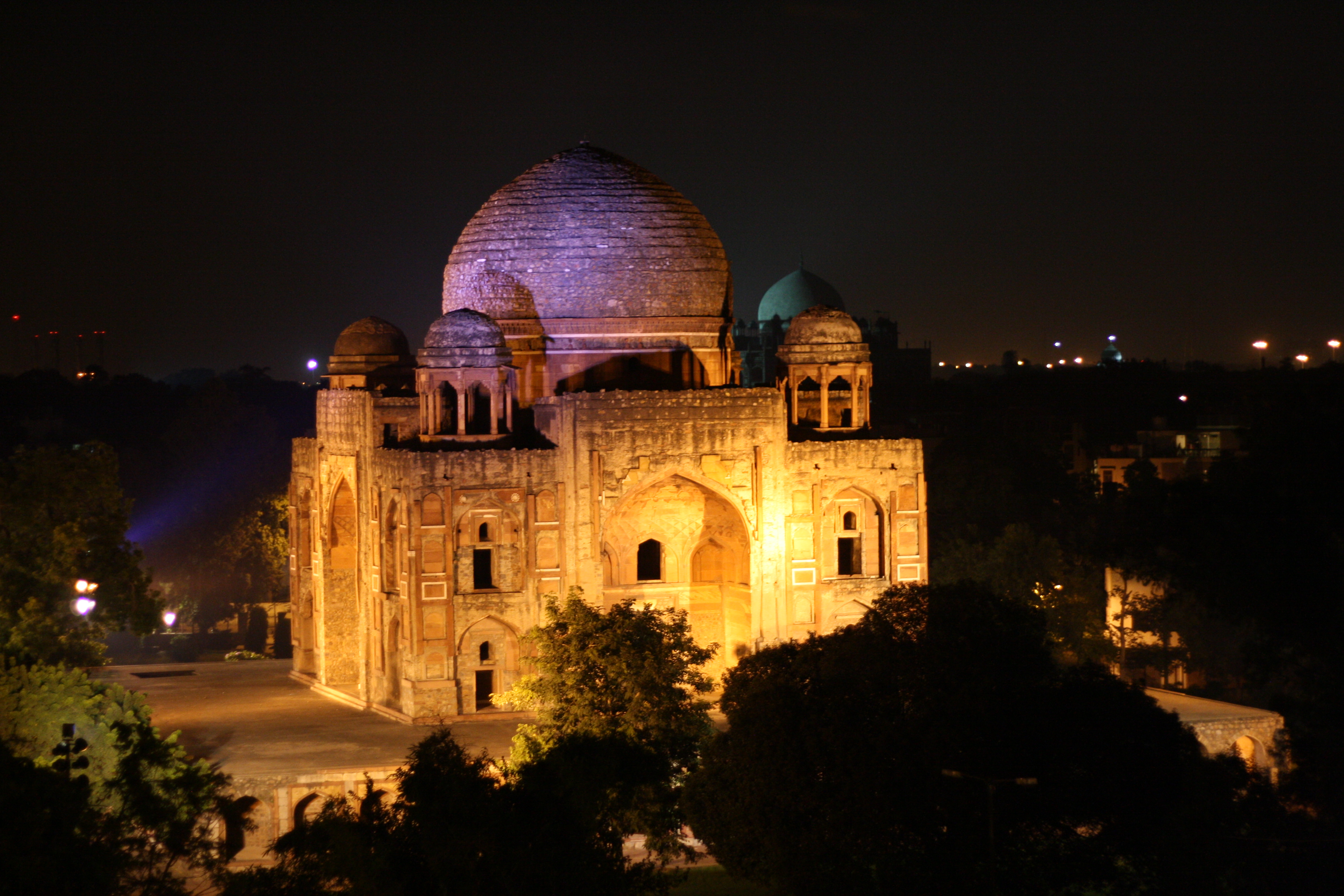
Less explored....less known...The Tomb of Rahim

The Okhla Bird Sanctuary is situated in Gautam Budh Nagar in the middle of the Okhla Vihar and Barrage upon the river Yamuna in New Delhi. In order to conserve the numerous resident and migratory birds we find here and also to develop it keeping in view the tourist inflow in the year 1990, this area was declared as Okhla Bird Sanctuary. Towards the south of this sanctuary we find Kalandi Kunj which is another appealing spot.
Among nearly 319 species of birds found here, around more than 50 % are migratory birds coming from Tibet, Europe and Siberia who come here for their winter migration. Soon after the arrival of the winter season in Novemner, the arrival of migratory birds starts and with the onset of the summers around March, those visitors start flying back to their own land.
Several migratory birds visit the sanctuary in large numbers in winters with the commonest being the Northern Shoveller Anas Clypeata and Gadwall Anas strepera. The Northern Pintail Anas acuta and Ruddy Shelduck Tadors ferruginea, the rare migratory birds like the Garganey Anas querquedula, Common Shelduck Tadora tadorna, Comb Duck Sarkiodiornis melantos are also seen occasionally. Other commonspecies include the Common Teal Anas crecca, Tufted Duck Aythya fuligula, Common Pochard Aythya ferina, Greylag Goose Anser anser and the Bar-headed Goose Anser indicus. The resident Spot billed Duck Anas poecilorhyncha is abundant. There are several other bird species like mynas, drongos, babblers, francolins, peafowl, bee eaters etc are also seen commonly along the bund.